
The best place to watch winter birds in Alameda is the east end of Crown Memorial State Beach, near Elsie Roemer Bird Sanctuary on Shore Line Drive. From roughly October through March, migrating shorebirds gather there by the hundreds to feed on the mudflats. A rising tide pushes them closer to shore, so that’s the best time for families to visit.
Summer at Crown Beach belongs to sandcastles and picnics. Winter belongs to the birds.
Why Do So Many Birds Come to Alameda in Winter?
San Francisco Bay is a major rest stop on the Pacific Flyway, a migration route that stretches from Alaska and the Arctic down to South America. Alameda’s shallow mudflats are packed with worms, clams, and tiny crustaceans, which makes them perfect fuel for long-distance flyers.
Many of the birds you’ll see in November flew thousands of miles to get here. To a kid, that’s a pretty amazing fact to say out loud while you’re watching one eat lunch.
6 Winter Birds Kids Can Spot at Crown Beach
Marbled Godwit: A tall, cinnamon-brown bird with a long bill that curves slightly up. Watch it probe deep into the mud like a straw.
Long-billed Curlew: The bill on this one curves down and is almost as long as its body. Kids love comparing it to the godwit.
Sanderling: A small white-and-gray bird that runs back and forth chasing waves, like a wind-up toy.
Black-bellied Plover: A chunky gray bird that runs, stops, and pecks, then repeats. In winter its black belly is mostly gone, but the name stays.
Western Snowy Plover: A tiny, sand-colored puffball and a threatened species. These plovers winter on Crown Beach inside roped-off areas, so look, but don’t cross the rope.
Bufflehead: A small, round duck that dives underwater and pops back up like a cork. Males have a big white patch on their heads.
Family challenge: Can you spot all six before the tide turns?
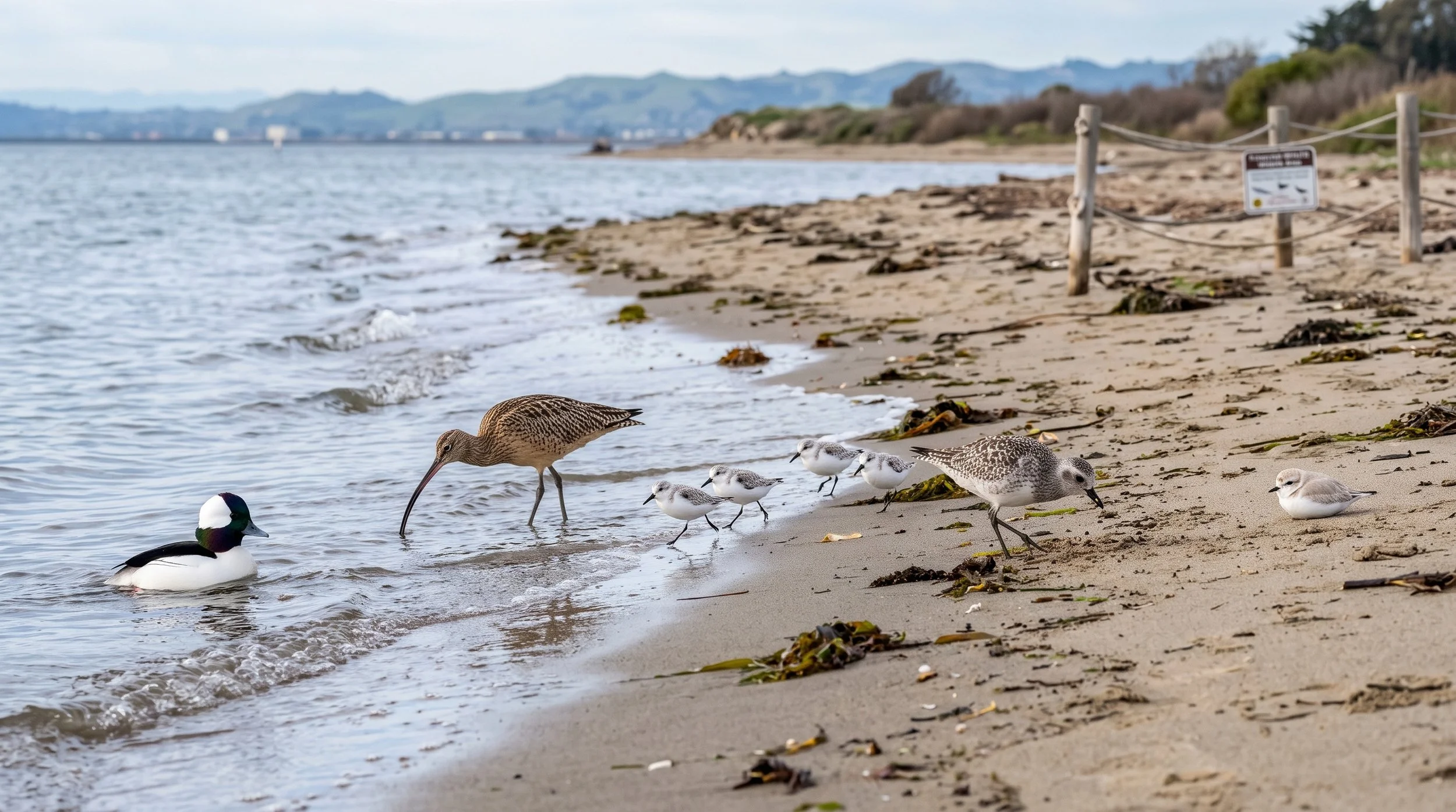
Left (in the water): The small, round male Bufflehead with its prominent white head patch.
Middle-Left (near the water): The Long-billed Curlew, showcasing its incredibly long, down-curved bill.
Center (running on the wet sand): A busy little group of Sanderlings.
Middle-Right (on the sand): A chunky, speckly Black-bellied Plover in its winter plumage.
Far Right (in the dry sand area): A tiny Western Snowy Plover resting near the roped-off natural area.
When to Go: Follow the Tide
Best time: about 1 to 2 hours before high tide. Rising water pushes the birds closer to shore.
Low tide: birds spread far out on the mudflats. That’s great with binoculars but harder for little eyes.
Check a tide chart for “Alameda” before you head out.
How to Be a Good Bird Neighbor
At Gaia Guides, we teach campers that the Bay is someone’s home before it’s our playground. The same rules apply on land:
Stay outside fences and ropes. They protect birds that are resting and feeding.
Keep dogs leashed. One chase can cost a bird energy it needs for migration.
Watch from a distance. If birds start walking or flying away, you’re too close.
Use quiet voices, and binoculars if you have them.
Make It an Adventure
Bring a notebook so kids can sketch the birds they see.
Pair your walk with a stop at the Crab Cove Visitor Center at the north end of Crown Beach (check hours before you go).
Bundle up. Shoreline wind in winter is no joke.
Learning the Bay Is Part of Camp
At Gaia Guides summer camp, environmental education happens right from the board. Campers learn to identify birds, read tides, and understand the ecosystem they’re paddling through, all at Ballena Bay Marina, just down the shore from Crown Beach.
2027 summer camp runs June 7 to August 13 for kids ages 6 to 14. Registration opens January 1, 2027, with $50 off through February 1.
Quick FAQs
When is the best time to see shorebirds in Alameda? Roughly October through March, about 1 to 2 hours before high tide.
Where should we go? The east end of Crown Memorial State Beach, near Elsie Roemer Bird Sanctuary at Broadway and Shore Line Drive.
Is it kid-friendly? Yes. The shoreline path is flat, easy to walk, and works for strollers.
